
Web Image Formats in 2026: Choosing Between WebP, AVIF, and JPEG XL
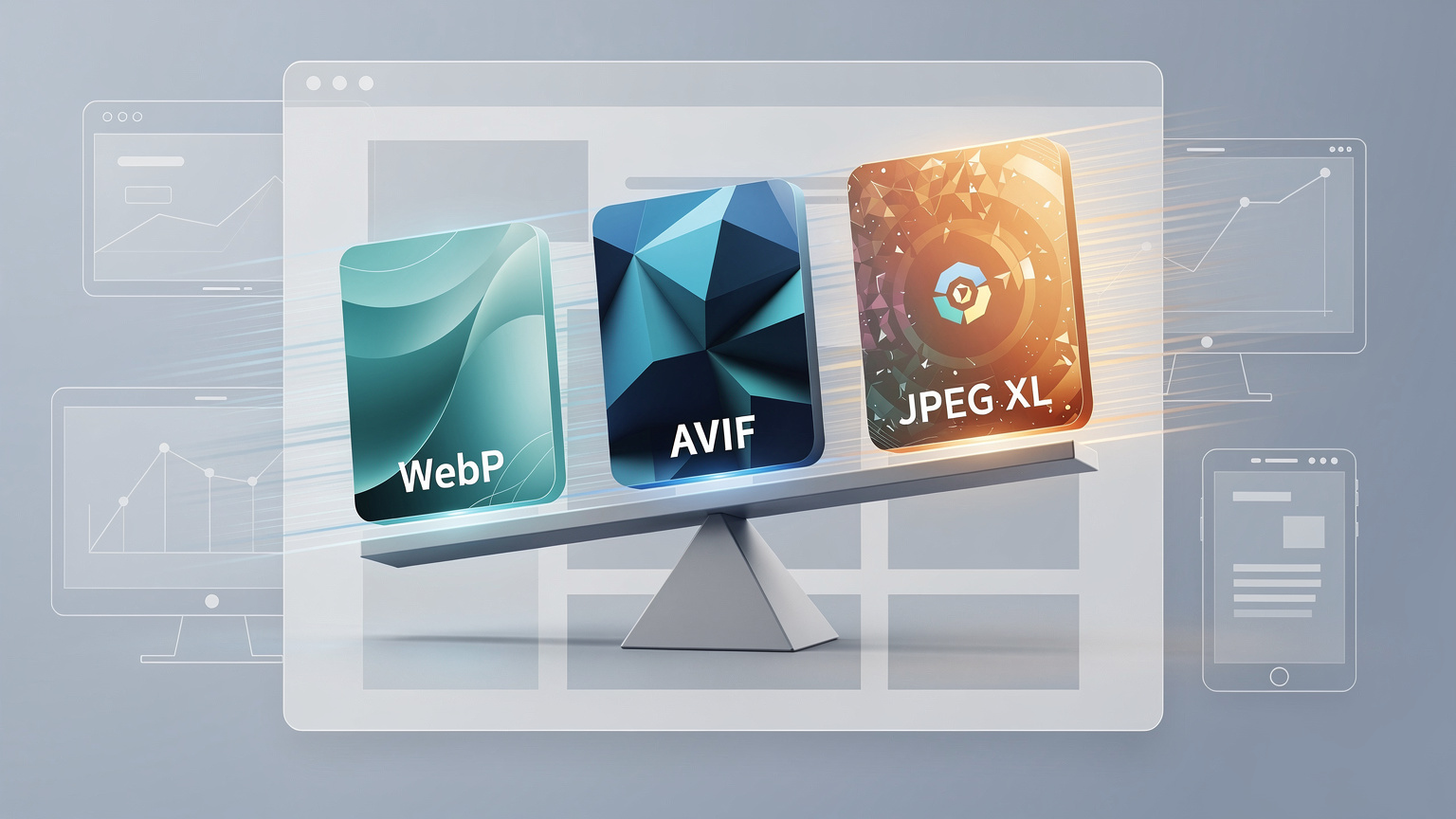
As web performance becomes increasingly critical, the choice of image format significantly impacts page load times and user experience. This comparison delves into WebP, AVIF, and JPEG XL, evaluating their strengths, weaknesses, browser support, and ideal use cases for the web landscape of 2026.
In the ever-evolving digital landscape of 2026, optimizing web performance is paramount, with images often constituting the largest portion of a webpage's data footprint – anywhere from 50% to 70%. This reality places a significant spotlight on the image formats we employ, directly influencing key metrics like Largest Contentful Paint (LCP) and overall Core Web Vitals. The decision of which format to adopt is not merely aesthetic; it's a technical imperative for developers and designers aiming for faster load times, reduced bandwidth consumption, and improved user engagement. This article dissects the leading contenders: WebP, AVIF, and JPEG XL, to help navigate the complex choices ahead.
WebP: The Versatile Default
For a robust default option in 2026, WebP stands out due to its near-universal browser support. Developed by Google, WebP offers a compelling blend of efficient compression, supporting both lossy and lossless encoding, transparency, and even animation. Crucially, it achieves file sizes 25-35% smaller than traditional JPEGs without a discernible loss in visual quality, making it a strong contender for replacing both JPEG and PNG across a wide range of web assets.
Its encoding process is also notably faster than some of its more advanced counterparts, presenting a practical advantage for large-scale image processing workflows. This combination of broad compatibility, performance benefits, and feature set solidifies WebP's position as a sensible go-to format for many web applications.
AVIF: The Compression Champion for Impact

When achieving the absolute smallest file sizes for critical visual elements is the priority, AVIF emerges as a powerful choice. Built upon the advanced AV1 video codec, AVIF delivers significant file size reductions, often achieving 40-60% smaller files than JPEG and a further 20-35% reduction compared to WebP. It also brings support for High Dynamic Range (HDR) and wide color gamuts, enabling richer and more vibrant imagery.
However, this compression prowess comes with trade-offs. AVIF's encoding times can be considerably slower than WebP's, potentially introducing operational costs for high-volume processing. Furthermore, while AVIF enjoys approximately 96% global browser support, this isn't absolute. Developers must implement fallback strategies using formats like WebP or JPEG for the remaining percentage of users who may encounter compatibility issues.
AVIF is particularly well-suited for hero images, large product shots, and any visually intensive content where file size is a bottleneck and the benefits of superior compression are most acutely felt.
JPEG XL: Advanced Features, Limited Reach
JPEG XL represents a significant leap in image compression technology, boasting a wide array of advanced features. It supports both lossless and lossy compression, HDR, wide color gamuts, animation, and alpha transparency. A standout feature is its progressive rendering capability, which allows images to display a low-quality preview quickly, improving the perceived loading speed on slower connections. It even includes a unique lossless transcoding feature for existing JPEGs.
Despite its technical merits, JPEG XL faces a significant hurdle in 2026: limited browser adoption. Currently, its primary support is within Safari, with considerably less broad integration across other major browsers. This restrictive compatibility means that relying on JPEG XL as a primary format would necessitate extensive fallback mechanisms, largely negating its advantages for the majority of web users. While it holds promise for specific archival use cases or niche applications, its widespread web deployment remains uncertain.

When to Use Which Format
The optimal choice of image format hinges on specific use cases and priorities:
- Default & Versatility: WebP is the recommended default for its universal browser support, fast encoding, and excellent compression, suitable for general web assets.
- High-Impact Visuals: AVIF excels for hero images, large banners, and product displays where maximum file size reduction and high visual fidelity (including HDR) are critical. Remember to implement fallbacks.
- Universal Compatibility: JPEG remains the most reliable format for scenarios demanding absolute compatibility, such as email campaigns and printable assets.
- Specific Graphics: For logos, icons, and simple flat graphics, SVG is often the superior choice. If vector graphics are not feasible, WebP's lossless mode or PNG are viable alternatives.
- Animated Content: For animations, modern video formats like MP4 or AV1 are far more efficient than animated GIFs.
Understanding the Trade-offs
Choosing an image format involves balancing several factors: file size reduction, visual quality, browser compatibility, and encoding costs. WebP offers a strong balance for general use. AVIF pushes the boundaries of compression for visually dominant content but requires careful implementation due to slower encoding and the need for fallbacks. JPEG XL, while technically sophisticated, remains hampered by its limited browser reach, making it a less practical choice for broad web audiences in the current landscape.
As web performance continues to be a defining factor in user experience and search engine optimization, adopting the right image formats is no longer an option but a necessity. By understanding the distinct capabilities and limitations of WebP, AVIF, and JPEG XL, developers and designers can make informed decisions to build faster, more efficient, and visually compelling websites in 2026 and beyond.